

06-14-2026 - A VIEW FROM THE SHEEP - Psalm 23- Part 2

PASTOR ROB INRIG OF BETHANY BAPTIST CHURCH IN RICHMOND, BC, CONTINUES TO LEAD US TO THIS PERSPECTIVE: IN JESUS, BEING MY SHEPHERD REQUIRES THAT HE BE MADE MINE THROUGH WHAT HE DID ON THE CROSS.

+++++
I invite you to pray and make this prayer personal, and for whoever needs support in difficult times, we mention names of those who are in need, and also pray for the members of the family and friends. You can also mention the name in need.
(Vicky O, Nancy R, Tere G, Stevie A, Socrates D, Sara’s mom H, Margarita G, Rosy Ch, Patricia L, Lina J, Manuel D, Silvia H, Magda-, Miguel H.L, Brianda M, Alejandro M, Natalia M. Oscar N.D, Luis Carlos V).
I ask for your healing over every part of my life – physically, emotionally, mentally, and spiritually. I ask that you make me strong and resilient for the days ahead. I know that you have a great purpose for those who believe in your name.
Help me not to allow the distractions and struggles of my days to weigh me down to the point of exhaustion. I know that your desire is for me to live this life abundantly and free. And my greatest desire is to reflect your love and light to a world that so desperately needs your hope.
For those I love who are facing cancer or a hard diagnosis, I pray for your covering of healing and grace. I pray for your strength and your great peace to fill their lives, reminding them that you are close. Thank you that nothing is impossible with you. Thank you for fighting for us, and you are bigger than anything this world throws our way.
I lean fully on You, Lord, for You alone are able. We love you; We need you this day, and always.
In Jesus' Name,
Amen.
+++++
For many reasons, the Psalms have been an incredible place where people encounter God. Sometimes here finding Him as a place of refuge, of encouragement, of joy and celebration and sometimes places of wrestling and anger, experiences of injustices poured out and where desired judgment is asked for. Emotions raw, emotions real.
At first glance, the 23rd Psalm can leave the impression that because the LORD is our Shepherd, our lives will be filled with green pastures and stilled waters free of discord, pain and opposition. We want the idyllic of white fleecy critters lolling around in the sun - well fed, appropriately watered and religiously cared for, yet if we understand where this Psalm is situated in what David writes, we have a far better understanding of what this Psalm is to mean to us. The truth is, it’s never far removed from the ugliness and pain that surround and sometimes invade our lives.
As we noted last week, Psalm 23 is sandwiched between the 22nd, the Psalm of the Cross and the 24th , the Psalm of the Crown. Charles Spurgeon observed, The position of this Psalm is worthy of notice. It follows the 22nd, which is peculiarly, the Psalm of the Cross. There are no green pastures, no still waters on the other side of the 22nd Psalm. It is only after we have read, ‘My God, my God, why hast thou forsaken me?’ that we come to The Lord is my Shepherd. We must by experience know the value of blood-shedding and see the sword awakened against the Shepherd before we shall be able truly to know the sweetness of the Good Shepherd’s care.
Psalm 23 comes after Psalm 22 on purpose, because the Psalm of the Shepherd can only be known by what precedes it, the Psalm of the Cross. This Shepherd cannot be known without the Cross. Oh, He may be admired, may be respected, may say things we think are great without the Cross, but ‘known’ requires relationship. That is why all that is said in verses 2-6 about what the Shepherd does is determined by how we stand in relationship with the first 5 words of the Psalm, The Lord is MY Shepherd. To be MY Shepherd requires being made mine by what Jesus did at the Cross. If we haven’t repented and accepted Jesus’ forgiveness of our sin given to us at the Cross, He is NOT our Shepherd. Not far removed from that, is if we aren’t coming to Him as LORD of our life, why should we expect to know Him as the Shepherd who is leading our life?

His leading is determined by seeing who He is while also coming to an understanding of who we are - sheep. Sheep are far from being the brightest of creatures. Sheep that have no means of defence. Sheep that will follow others even if those others are walking off a cliff. Sheep who will graze from the break of day to the dark of night, head down, eating away, nibbling themselves lost. Sheep are oblivious to the surrounding world and the dangers that exist. And one more reality of sheep is that they can’t clean themselves. Beautiful when washed and white woolly, but unclean collectors of dirt, thistles and manure when left to their own devices.
It’s hardly the way we want to think of ourselves. We’d rather see ourselves as clean, strong and independent. Wise. Some of us courageous. Others, visionaries. In some respects, there may be parts of this that are true - at least in the context of being sheep. But as the Bible describes, still sheep. Psalm 100:3 tells us, Know that He is LORD JEHOVAH our God, and it is He who has made us, and it was not we ourselves; we are His people and the sheep of His pasture. Jesus, seeing a crowd, Had compassion for them, because they were harassed and helpless, like sheep without a shepherd (Matt 9:36 and Isaiah says, All we like sheep have gone astray Is 53:6.
That fact informs us that we are sheep in need of a shepherd. This depiction of a shepherd and his sheep would have been very familiar to David’s original readers. From the earliest moments of Scripture, we have Cain and Abel, Abel, a shepherd bringing the firstborn of his flock as an offering to the Lord - this shepherd was later killed by his brother. Then there is Jacob and his sons - shepherds, which we are later told was a profession despised by the Egyptians. And don’t forget Moses, who, after spending early days in the palace, learned what it was to lay aside the glory of the palace to live faithfully as a shepherd, caring for the helpless and needy. Even in these few images, we are shown a shepherd who is killed, a shepherd who is hated, a shepherd who leaves privilege and glory to care for the needy and set the imprisoned free. And when we add David, the shepherd king who risked his life as the sheep’s provider and protector, we have a shepherd who is God-appointed as God’s anointed, victorious King.
The Lord is My Shepherd, I shall not want. He makes me lie down in green pastures; He leads me beside the still waters. He restores my soul; He leads me in the paths of righteousness for His name’s sake. Yea, though I walk through the valley of the shadow of death, I will fear no evil; for You are with me; Your rod and Your staff, they comfort me. You prepare a table before me in the presence of my enemies; You anoint my head with oil; My cup runs over. Surely goodness and mercy shall follow me. All the days of my life, and I will dwell in the house of the Lord forever.

Carrying on from verse 1 looked at last week, verse 2 reminds this Shepherd-LORD leads and cares for His sheep by: He makes me lie down in green pastures, He leads me beside still waters.
This part of the psalm is idyllic – lush hills, and streams of mountain water to refresh. It’s that warm, comfortable picture we go to, the manicured green and the radiant blue of a sun-filled sky. In the beginning, we see this Shepherd from the perspective of the sheep, but to truly understand, we need to return to the nature of the sheep that our Shepherd makes lie down.
Sheep will often graze in an area long after everything that can be eaten has been eaten, sheep grazing forever, even when there is nothing left to graze. Good pasture land may be close by, but with their head down, they don’t see it. It’s also true that even if they are full, they will continue to graze, not digesting what they have eaten. So busy eating, they fail to digest what goes in. Never stopping, never resting, always doing, always looking __ busy, busy, busy - just like us wearing our busyness as a badge of honour. In our busyness, often trying to run away from the anxiety whispering we are less than, trying to mute the inner voice that we need to do more, we need to be more.
Perish the thought if we were to say that we weren’t busy, in essence, communicating that in some way we are of lesser value. Our busyness chasing after who we think we must be, what we must do, the achievements we must make, and in that chase we often just left exhausted, we having little more to give, hurting ourselves and the relationships around us.
Shepherds tell us that sheep will not rest until they know they are safe. We can understand the disturbance from large predators. But more often than not, it’s the small things that cause unrest. Like the flies that circle their heads, or the rabbit that darts across their path or the power disputes that arise among the sheep. Sheep are skittish by nature. And the Shepherd’s answer? - applying oil to the sheep’s head that repels the flies. That same oil serves to eliminate any destructive force from the butting heads of competing sheep. Two heads no longer colliding but sliding off one another. The Shepherd steps in so the sheep will lie down. To these, Come to Me, all you who labour and are heavy laden, and I will give you rest. Take My yoke upon you and learn from Me, for I am gentle and lowly in heart, and you will find rest for your souls, Matt 11:28,29.
The Shepherd to whom we are to give the anxieties that keep us awake at night. The Shepherd with us, who tells us to lay our disputes down. One shepherd observed that sheep won’t go where they can’t see, so sometimes he needs to literally grab the sheep by the face and turn its head in the direction he wants it to go. I wonder if sometimes that’s my need to have my head aggressively grabbed to look up and see that my Shepherd is with me so I can lie down and safely rest.

We are also told that the Shepherd Leads me beside still waters. The phrase is actually ‘stilled’ waters. As noted, sheep are easily scared, and fast-running water fills them with fear. It should - because if they lose their footing and fall, they would be incapable of righting themselves, the weight of their wool taking them under waters that kill. Again, just like us, filled with fear, when waters of the unknown flood around, undermining and destroying those things in which we’ve put our trust. Bank accounts that spring holes, health that gives way, and an unknown future. The Shepherd is present amidst the roar of life, assuring that He holds us and will lead us. In those places, the Shepherd wants us to know that He is there to still the water where we can drink and be refreshed. Often, He doesn’t take us out of the places of swiftly moving waters; He gives us a safe, stilled place as waters rush by. It’s in these places that threaten to pull us under that Jesus wants to come and prove Himself faithful. Where He strips fear of its power.
But when we go it alone and wander off from where the Shepherd leads, when we refuse to lie or when we are determined to drink in other places, trouble will come, maybe not at first, but it will come. Sheep don’t know what to do when they aren’t in a community. They get scared, they get lost, and they actually get in danger - as do we. But the Shepherd’s heart is to find and bring us close to Him, then lie us down with the rest of the flock. Here, as verse 3 tells us:
He restores my soul; He leads me in the paths of righteousness for His name’s sake
Where the sheep gets in trouble is when he forgets who he is. Deluded in how he sees himself, he thinks himself strong. He thinks himself wise. He thinks himself sufficient. For a moment, let’s give him the benefit of the doubt and suggest, perhaps, these things are true when he is surrounded by others of his kind. When circumstances, dangers and trouble aren’t near. When others aren’t predatory or aren’t positioning for power or conquest.
But the world he has stepped into isn’t comprised of those such as these. That world is a world his shepherd has led him through, a world of evil that is out to destroy. And yet it is into this world that the Shepherd, at great personal cost, is willing to go, to find, to rescue and restore. The priority is to deal with the sheep in distress, which requires rescue, David, perhaps talking about what is called a cast sheep. This sheep, when it gets knocked down or lies too far on its side, can’t get up, and with that, gases build up, cutting off circulation to its legs. Left long enough, it will die. The shepherd needs to come alongside to massage life back into its limbs, where the gas is broken down, and functioning is restored to its legs. Without the intervention of the Shepherd, death is certain, but rescued, the sheep can not only be repositioned, he can also be renewed to return to the paths the Shepherd still has for them.
This is the good news of the gospel, that no matter what we have done or where we have been, no matter how lost we’ve become or how fearful we’ve been, the Shepherd is always ready to rescue and restore. That Shepherd is ready to lead the lost one back to the path that He knows is best. This Shepherd, whom we are to trust and follow, who knows where to lead, knows when to lead, and knows how to lead. The Shepherd’s character as one who loves, one who rescues, one who makes new is on the line. He is coming to find the wayward one to lead it back to the path that is best for him.
All this requires the Shepherd seeing us - seeing each one and knowing where we need His help, His comfort, His enabling. So what have we been told so far? That this Shepherd provides, He protects, He sees and comes into our places of difficulty, that this Shepherd restores.
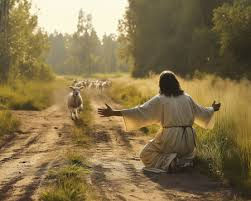
But as a reminder, this Shepherd only does this for those who are His. The promises of Psalm 23 are not for those warmed by nice thoughts and nicer imagery. Simply, we are NOT all God’s children. All His creation - yes. All those to whom He extends an invitation to know Him - yes. But all His children - no. His children are ONLY those who have bowed before Him as Saviour in what we are told in Psalm 22 and what we read in the first line of Psalm 23 - The LORD is MY Shepherd. As John 1:12 makes clear, But as many as received Him, to them He gave the right to BECOME children of God, to those who believe in His name. Only to those who believe. Jesus answered them, I told you, and you do not believe. The works that I do in My Father’s name, they bear witness of Me. But you do not believe, because you are NOT My sheep. Depart from me, I do NOT know you. Jn 10:25,26, Mtt 7:23. Understand, you can know Me, but right now you don’t.
Up to this point, the sheep’s focus is HE. He makes me lie; He leads me beside the still waters. He restores; He leads in right paths. The Shepherd is leading in the important, but now things are shifting from the important to the essential. Up to this point, the psalmist talks ABOUT the Shepherd, but when opposition and difficulty press in, when death comes near, he talks TO the Shepherd.
Yea, though I walk through the valley of the shadow of death, I will fear no evil; for YOU are with me; YOUR rod and YOUR staff, they comfort me.
When God’s presence is most needed, the psalmist says, You are there, present and equipped with YOUR staff and YOUR rod. God’s staff to lead and guide, and His rod as God’s weapon for battle when the enemy tries to rush in. No doubt David’s mind is revisiting his battles with the lion and the bear. The rod for close-up battle. In battles with enemies like these, David would not have escaped without wounds suffered and blood spilt. But that’s what a Shepherd who loves does. In days to come, those scars would bear testimony to the price the Shepherd had paid, reminding of the battles fought but more significantly, the victories won.
In the Middle East, when the weather gets extremely hot, the shepherd will lead his sheep down into the valleys where it is cooler and where streams of water are. Sheep hate going downhill, not knowing where they are going and why they are going there. It’s a journey of shadows and darkness. Populating this route are predators who know where the sheep have been and where they need to go, which means travelling through some dark and treacherous terrain.
It’s a time when predators come close but stay unseen in the darkness, this darkness also making the shepherd harder to see. Because of this, the sheep are more reliant on the Shepherd’s voice than the Shepherd whom they clearly see. This time referenced as the shadow of death in the Hebrew doesn’t necessarily refer to literal death, but rather it refers to places of gloom, of calamity. As it is often spoken of, it’s a valley of shadows and deep darkness.
But in the Shepherd’s powerful presence, can a shadow hurt you? Can the shadow of a bear rip you apart? Can the shadow of vipers deliver their deadly poison?

Yes - the shadows can startle and alarm. Their hearts can beat furiously. They disorient, filling us with debilitating fear. But a shadow has no payload to deliver. A shadow will deliver a representation of what is, but it cannot deliver anything too great for the Shepherd to handle. By this, I in no way am minimizing some of the tough things that will come. As followers of Christ, we will deal with things that are hard. There is heartache. Some things throw our world upside down. Sometimes ugliness invades. But it’s in this place of darkness, uncertainty and fear, where life no longer makes sense, that my relationship with the LORD takes on a different meaning.
As the sheep move from the known to the unknown, there is the risk of individuals going astray. Something along the way entices. Something gives the appearance of providing what is needed. Sometimes the travel can feel too hard or go on for too long. So for a moment, just a quick turn away to the ‘good’ stuff along the way - just a detour for a taste. That taste causes us to linger, the sheep not having any idea that a predator is preparing for a feast he is about to enjoy.
At times like these, we need to remember and to trust the Shepherd who knows what I need. The Shepherd who knows best because He sees what I can’t, He knows what I don’t. He knows the difference between what I want and what I need. That is why we can say, I will fear no evil for YOU are with me.
There’s one last image we’re given as we close this Psalm that’s actually a promise, YOU prepare a table before me in the presence of my enemies; YOU anoint my head with oil; My cup runs over
Though we can’t be sure, I wonder if David framed this prepared table around his experience when his son was trying to kill him. Weary, hungry, with his army in disarray, we read in 2 Samuel of 3 men, not even Israelites, who brought David, Beds and basins, earthen vessels and wheat, barley and flour, parched grain and beans, lentils and parched seeds, honey and curds, sheep and cheese of the herd, for David and the people who were with him to eat. For they said, “The people are hungry and weary and thirsty in the wilderness 2 Sam 17:28,29.
The love shown him unexpected and bountiful - a table prepared in the presence of his enemies. He, oil anointed as the rejected king who would soon take the throne that was rightfully his.
He is coming out of the deprivation of his experience to receive bounty. This is a picture of provision from the King’s table. And what you have here is the Lord claiming ownership of those who sit at His table. Those loved. His and as His, they are given rich provision of everything the LORD wants to give. Those at the table are untouchable by the enemies around. Those at the table under the protection of the One who hosts the table. That One with limitless resources. That One with awesome power
Surely goodness and mercy will follow me all the days of
My life and I will live in the house of the LORD forever
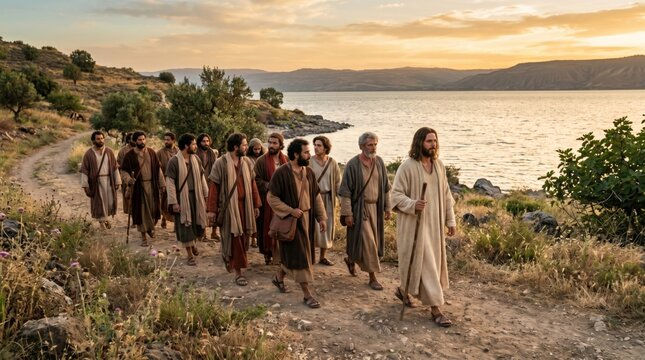
The word here for ‘follow’ is actually a word to describe a hunter pursuing his prey or an army chasing the enemy. And what is chasing after us? - God’s goodness and mercy. Chasing after us when we are in the wilderness, thinking this is an environment we’ll never get out of, chasing after us in the shadows we believe have hidden us so we’ll never be found, chasing after us when the life we hoped for feels buried and gone.
It’s not His goodness and mercy one day catching up at the finish line - no, they are pursuing us now, being dispensed upon us on the way and then poured out abundantly at a time to come.
This is Who your Shepherd is and the Promises He has made, so you too can say,
The Lord is MY Shepherd, I shall not want.
He is my Shepherd - I HAVE EVERYTHING THAT I NEED!
With gratitude for Voddie Bauchman’s (among others) insights on this Psalm


Comments